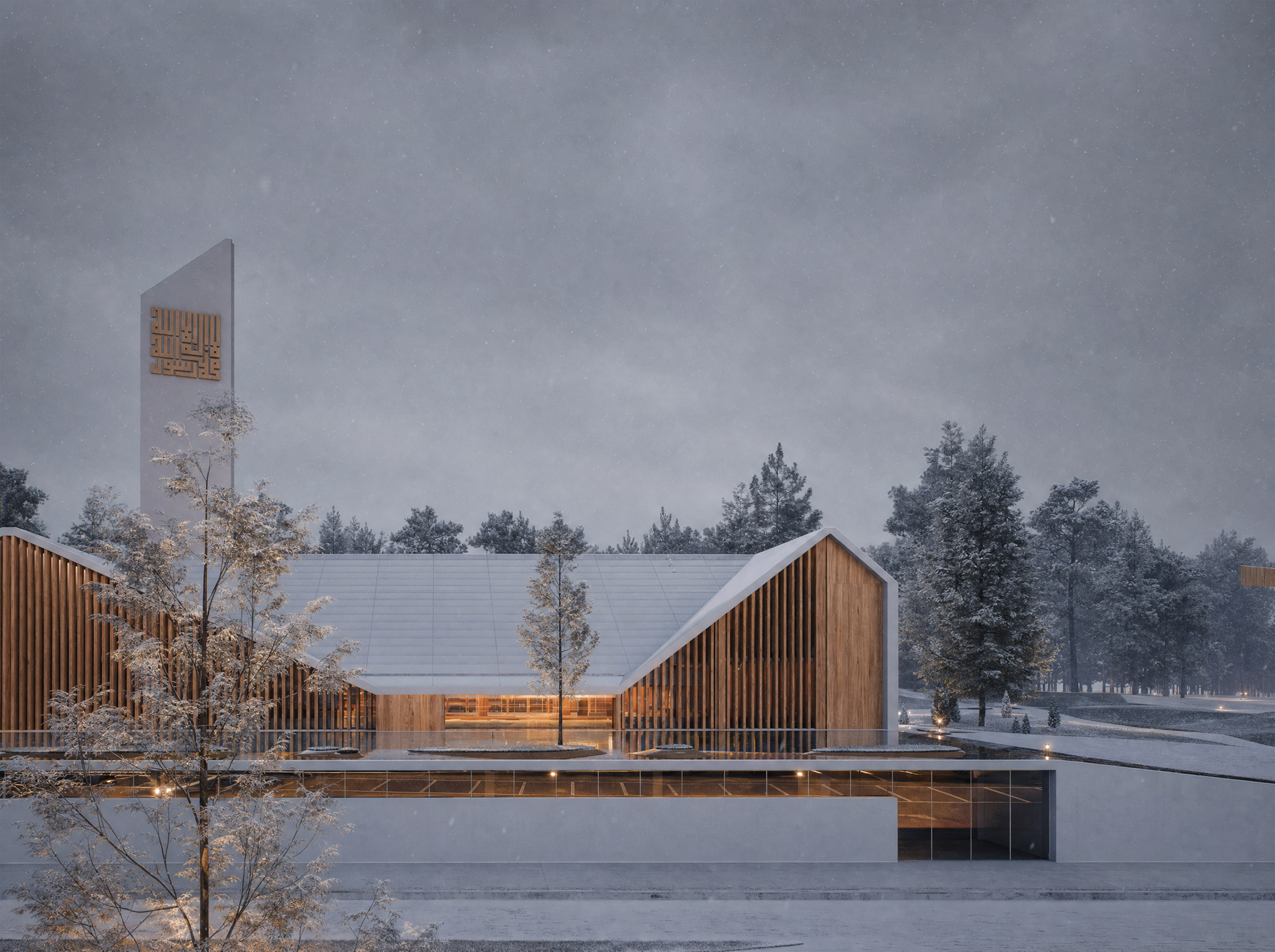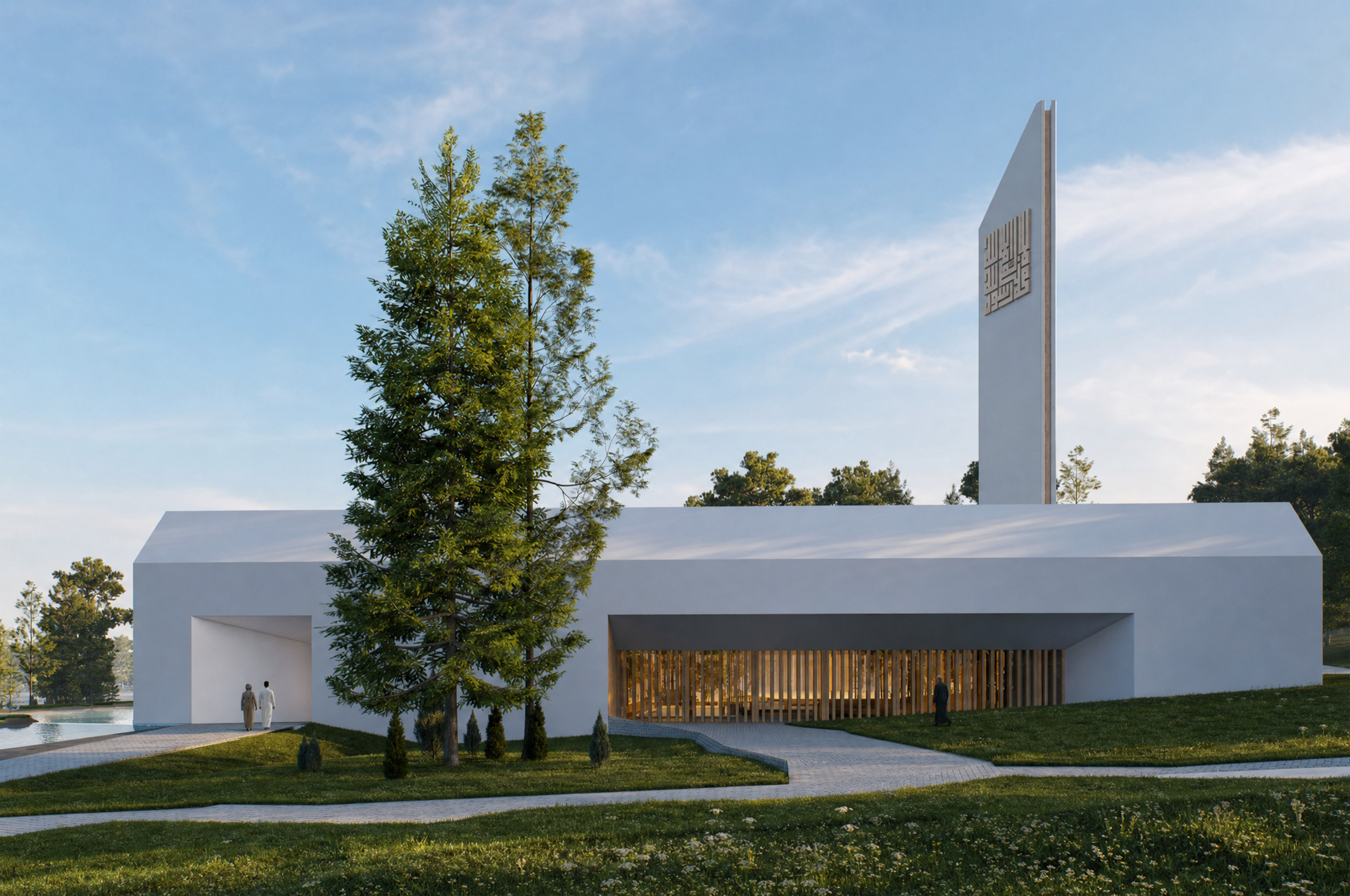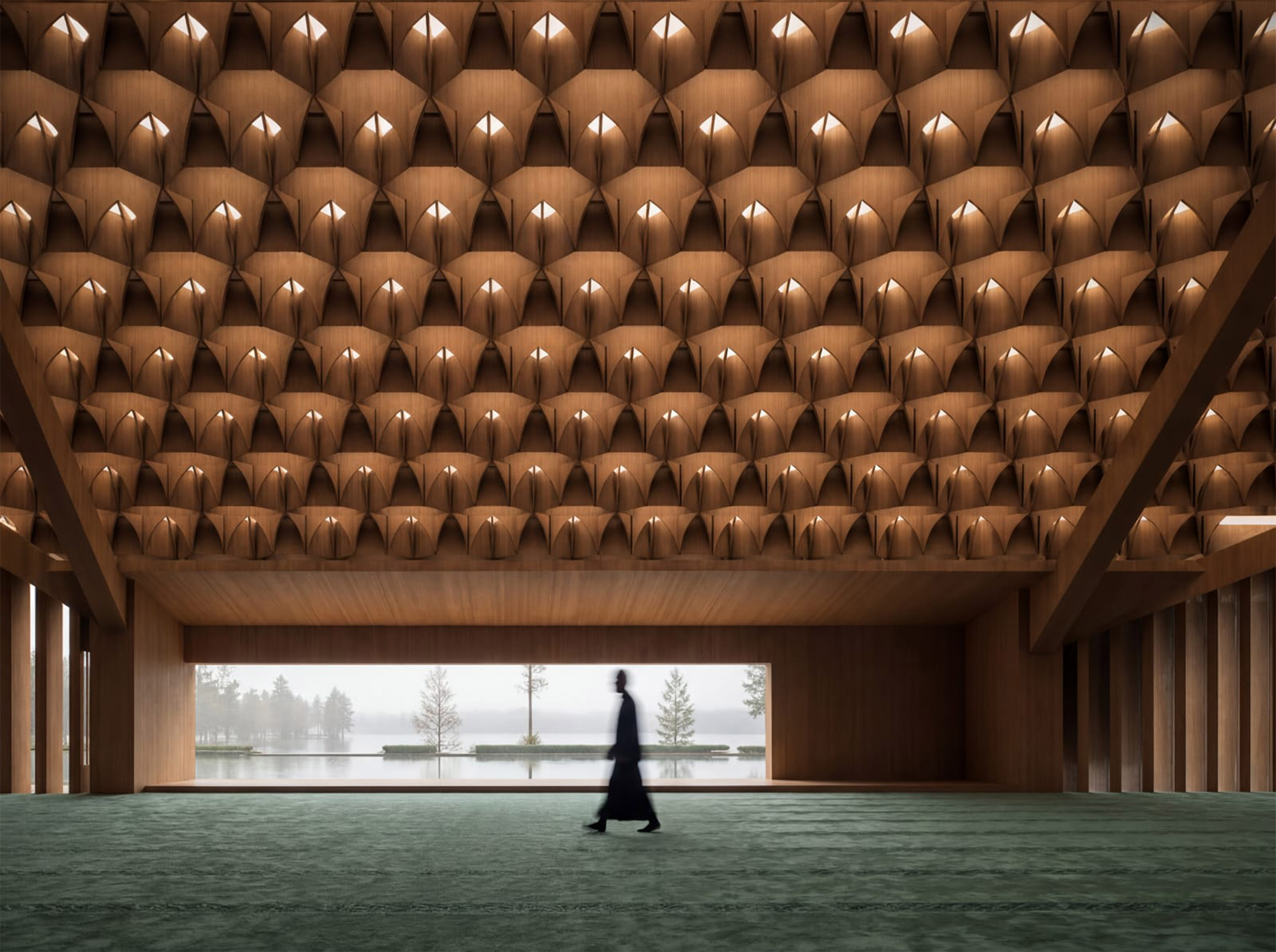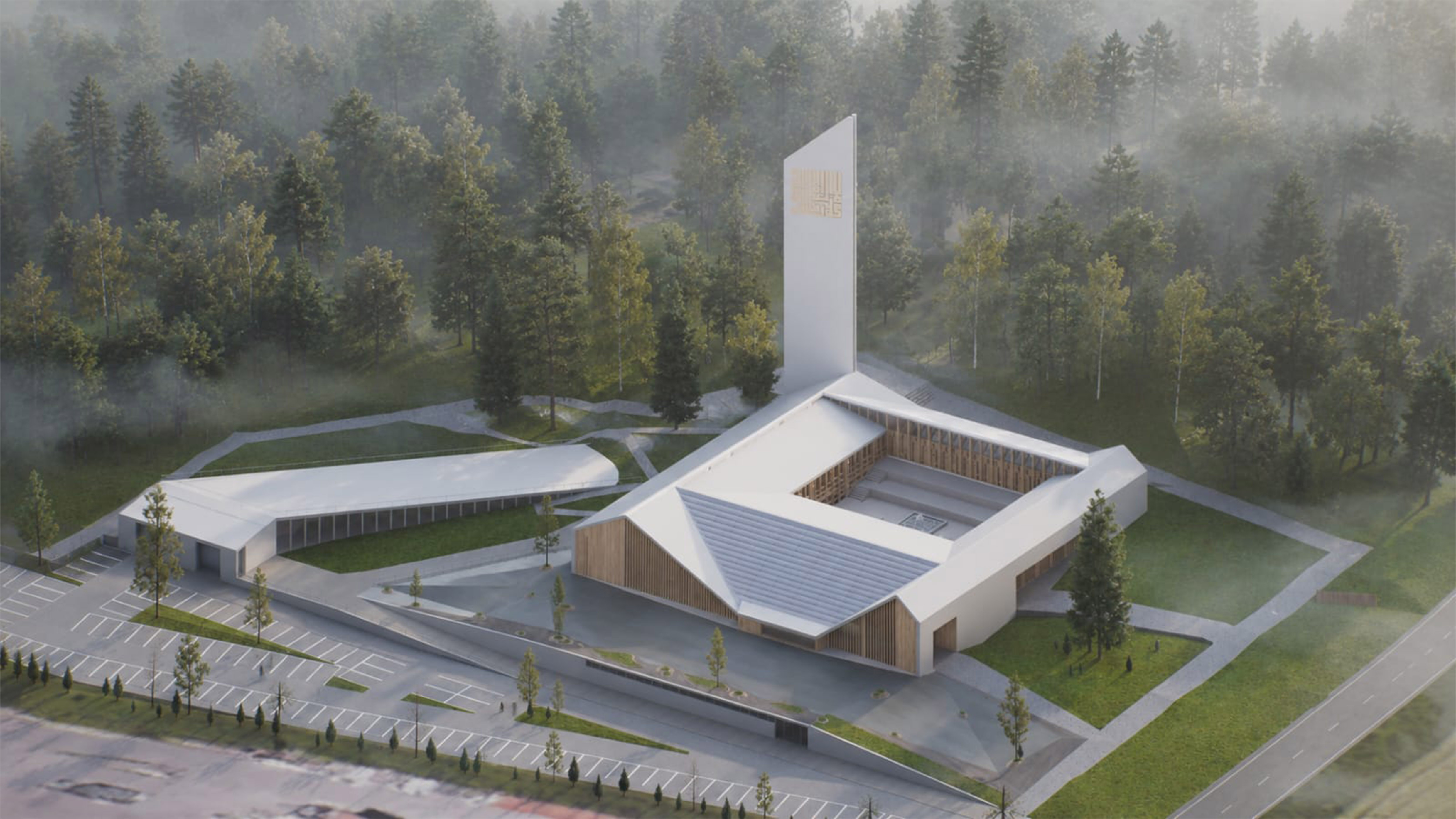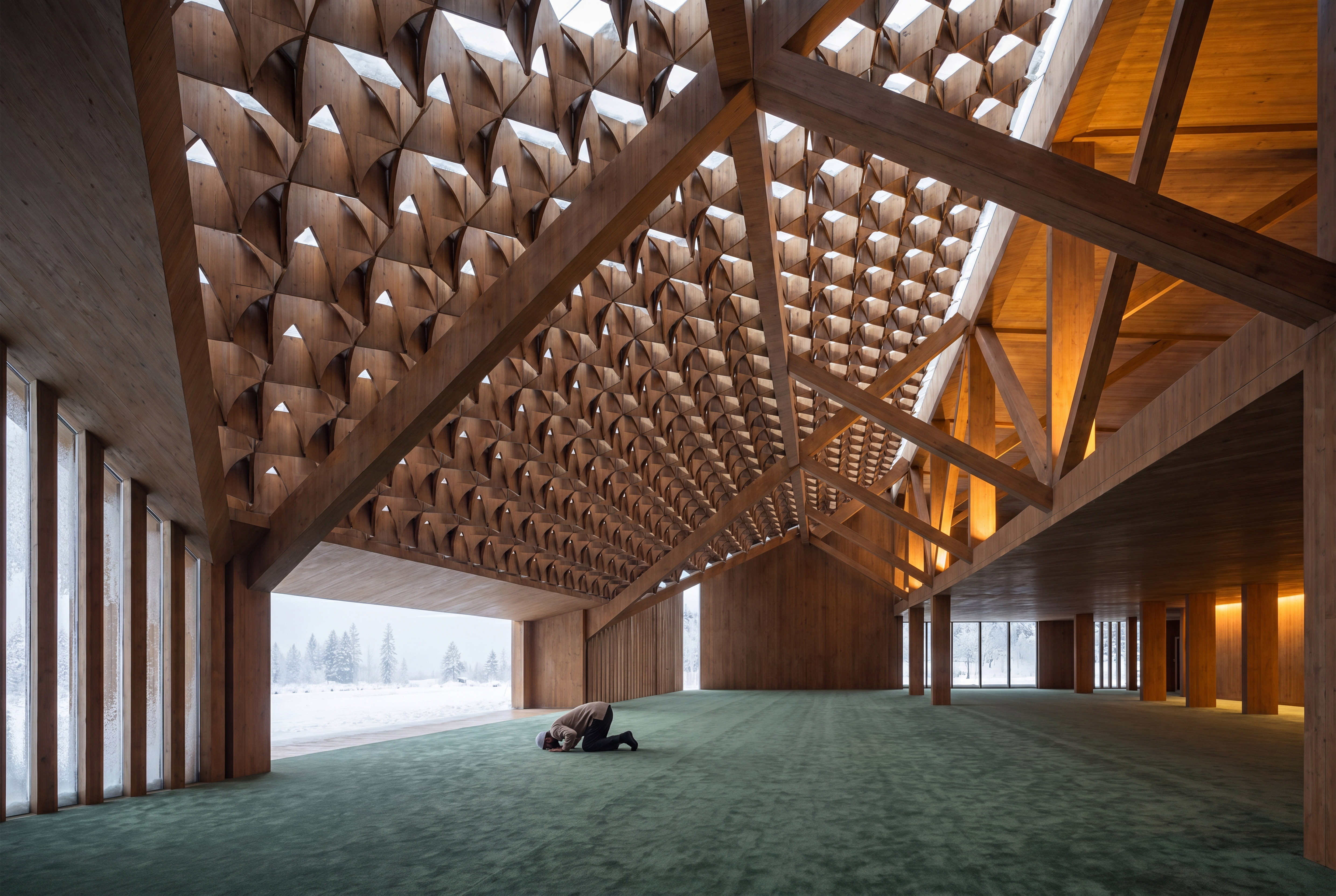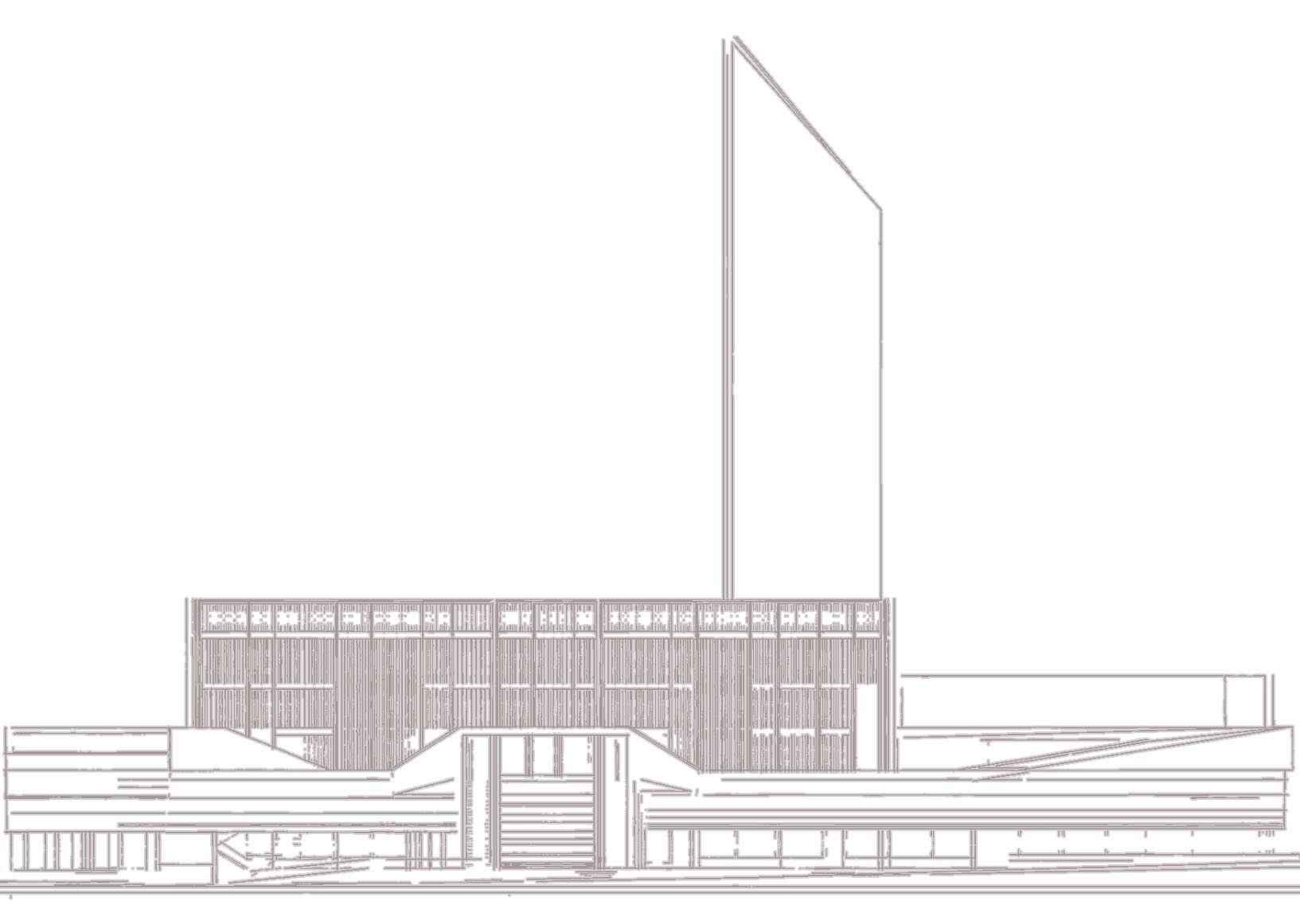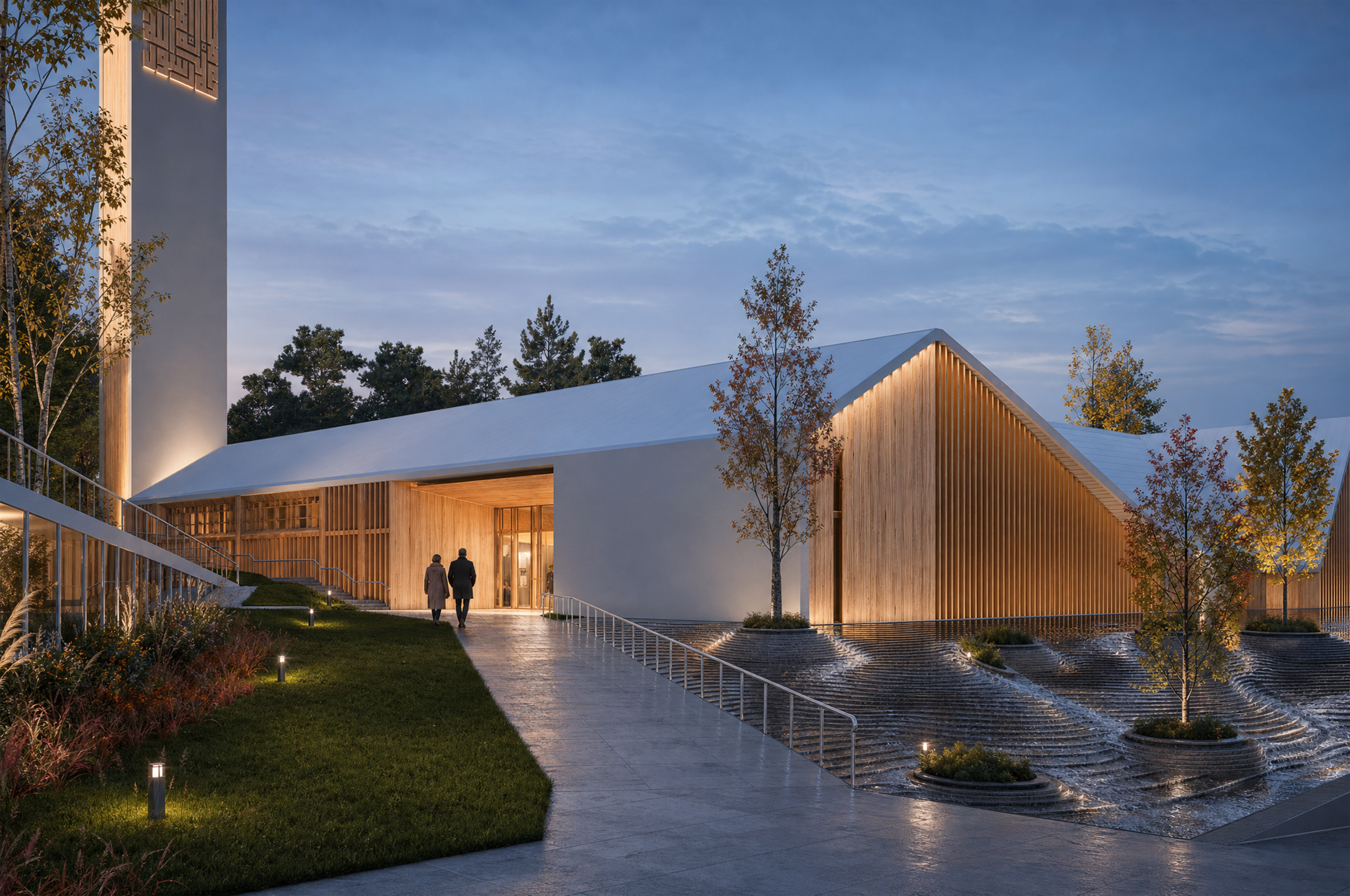
The Islamic tradition understands the mosque as more than a place of worship. Historically, Al-Masjid an-Nabawi served as a center for education, justice, healthcare, and community gathering. This project reinterprets that tradition through a contemporary, multifunctional Islamic Cultural Center.The first floor accommodates six classrooms for Islamic education, language learning, and workshops, alongside a library, reading room, 250-square-metre youth center, children's playroom, four administrative offices, and flexible multipurpose spaces for lectures, cultural events, and interfaith gatherings.
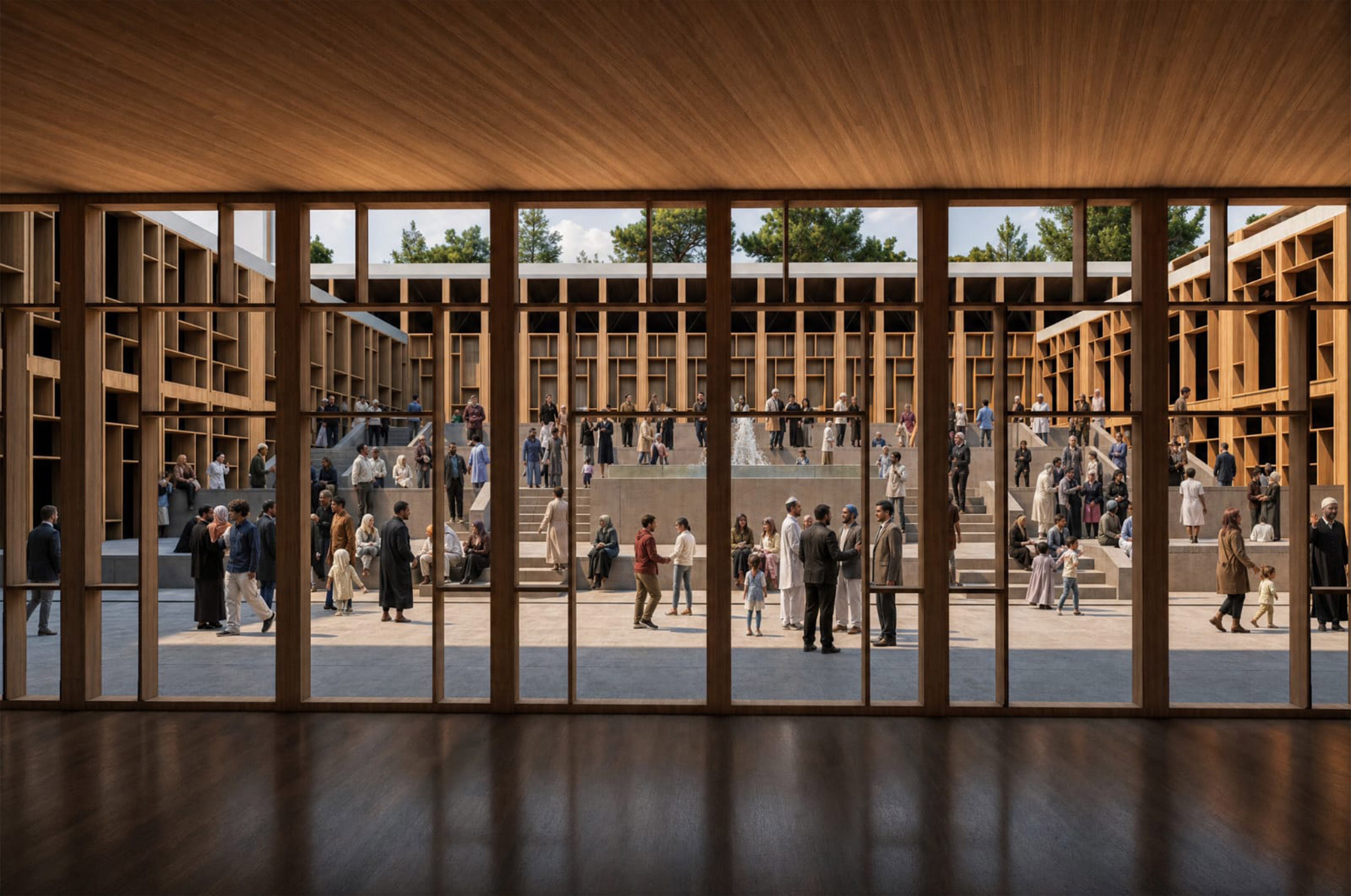
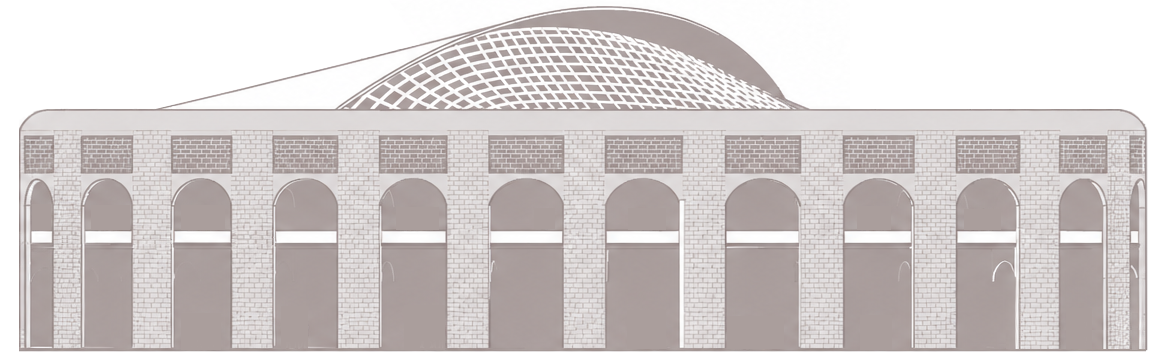
On the ground floor, a dining hall and kitchen serving up to 120 people support Ramadan Iftar, community meals, and catered events. Eight commercial rental units provide additional income, helping ensure the center's long-term financial sustainability while maintaining the sanctity of its religious spaces.The building extends its welcoming character beyond the Muslim community. The colonnaded entrance, south-facing garden, children's playground, and landscaped public areas invite the wider community of Turku to participate in shared activities.
Ultimately, the project envisions the Islamic Cultural Center as a vibrant civic hub where worship, education, social interaction, and cultural exchange coexist, strengthening community bonds and fostering a lasting sense of belonging.